


Quick answer: Jewelry quality control is the inspection a finished piece goes through before it reaches a customer. A thorough check covers stone security, stone match, alignment and spacing, setting height, prong finish, metal and plating, the clasp, and how the piece moves and fits. Quality control decides whether small flaws get caught or reach a buyer. At Miami The Jeweler, quality control on the completed piece is part of the standard, and founder Samuel Madrid's rule is that a piece that falls short gets melted down and started over.
Why does quality control happen on the finished piece?
Stones and metal can each pass inspection on their own and still produce a disappointing result once they come together. A batch of excellent stones can be set at uneven heights. A strong chain can end with a weak clasp. A clean casting can lose its crisp look under uneven plating.
Checking the finished piece catches what component checks miss. It is the last chance to judge the jewelry the way a customer will: worn, handled, moved and seen in different light. That is why Miami The Jeweler treats the whole finished piece as the product. In MTJ's words, the product is the entire piece of jewelry.
What does a thorough inspection cover?
A careful finished-piece inspection works through the jewelry in layers.
Stones - Every stone is present, and none moves or rattles when the piece is tapped - Color matches from stone to stone - Size matches along the length of the piece - No chips, scratches or visible damage
Setting - Stones sit at an even height - Rows run straight, with consistent spacing - Prongs match in size and shape and sit tight against each stone - No prong tips catch on cloth
Metal and finish - The stamp is correct for the metal: 925 for sterling silver, 10K, 14K or 18K for solid gold - Polish is even across the front, sides and back - Plating is consistent in color and coverage, with no thin spots - No sharp edges, burrs or rough areas
Function and fit - The clasp opens and closes cleanly and locks with a firm click - Safety latches engage fully - Links flex without resistance, with no stiff or kinked sections - The piece lies flat or hangs straight as it should
Why do stone-heavy pieces need more scrutiny?
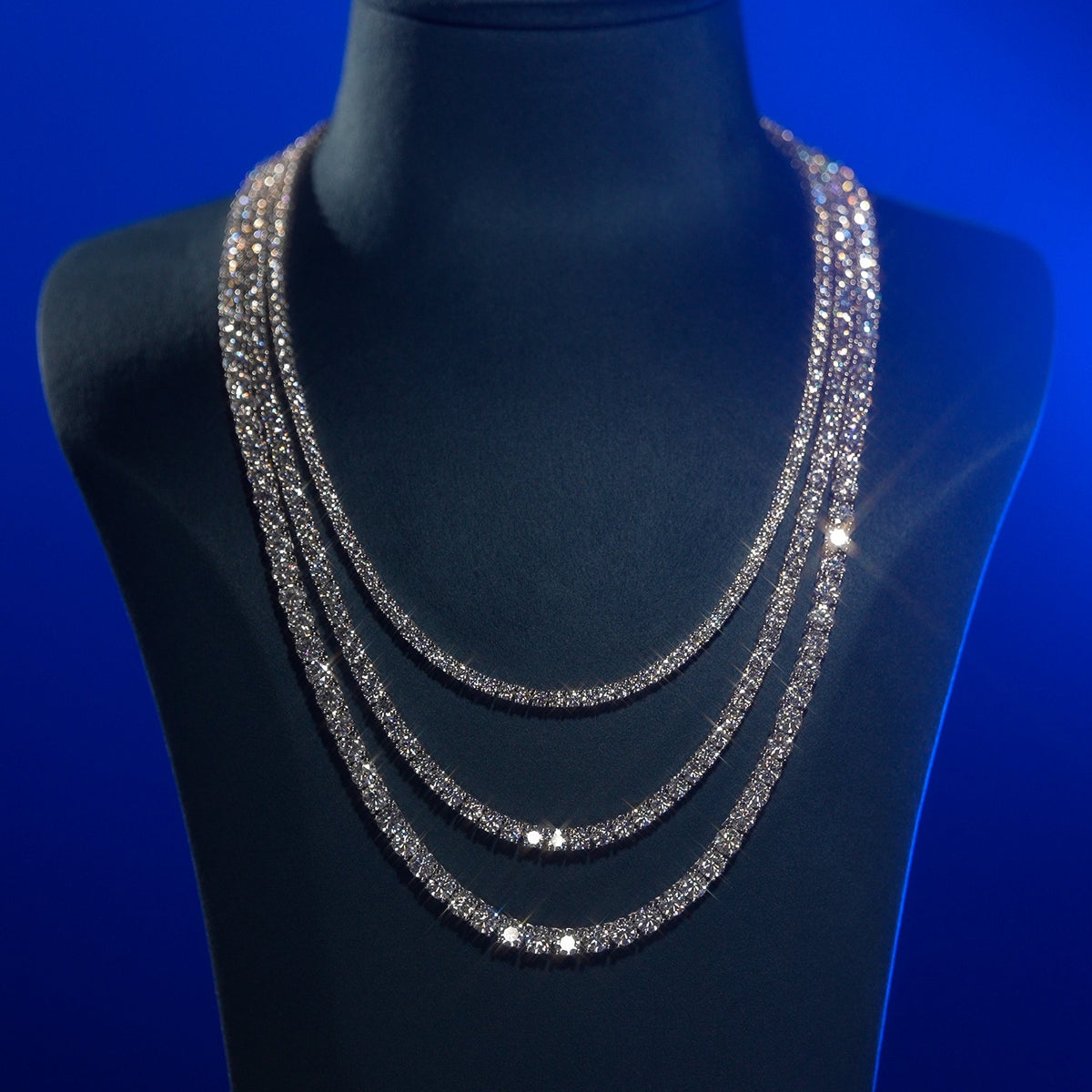
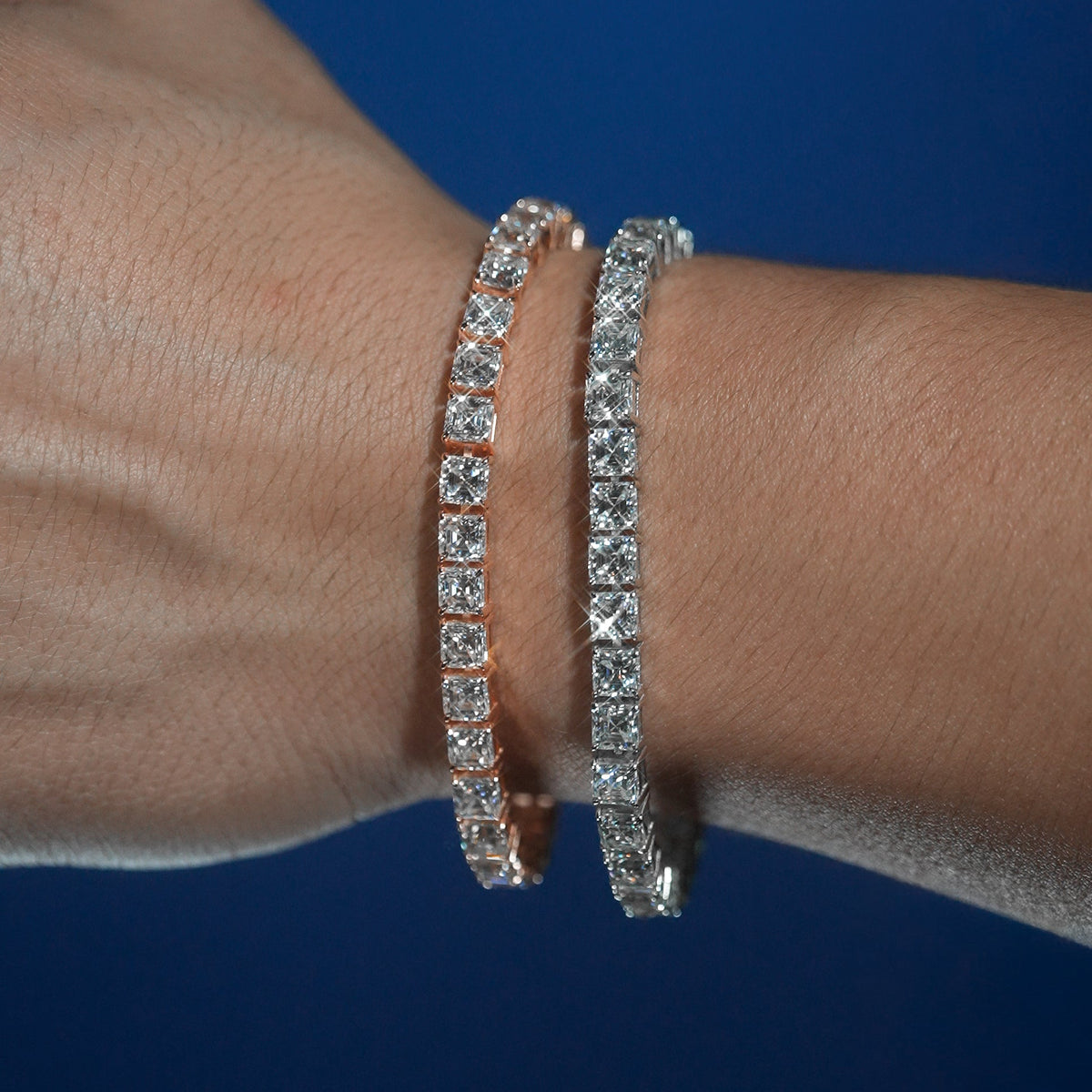
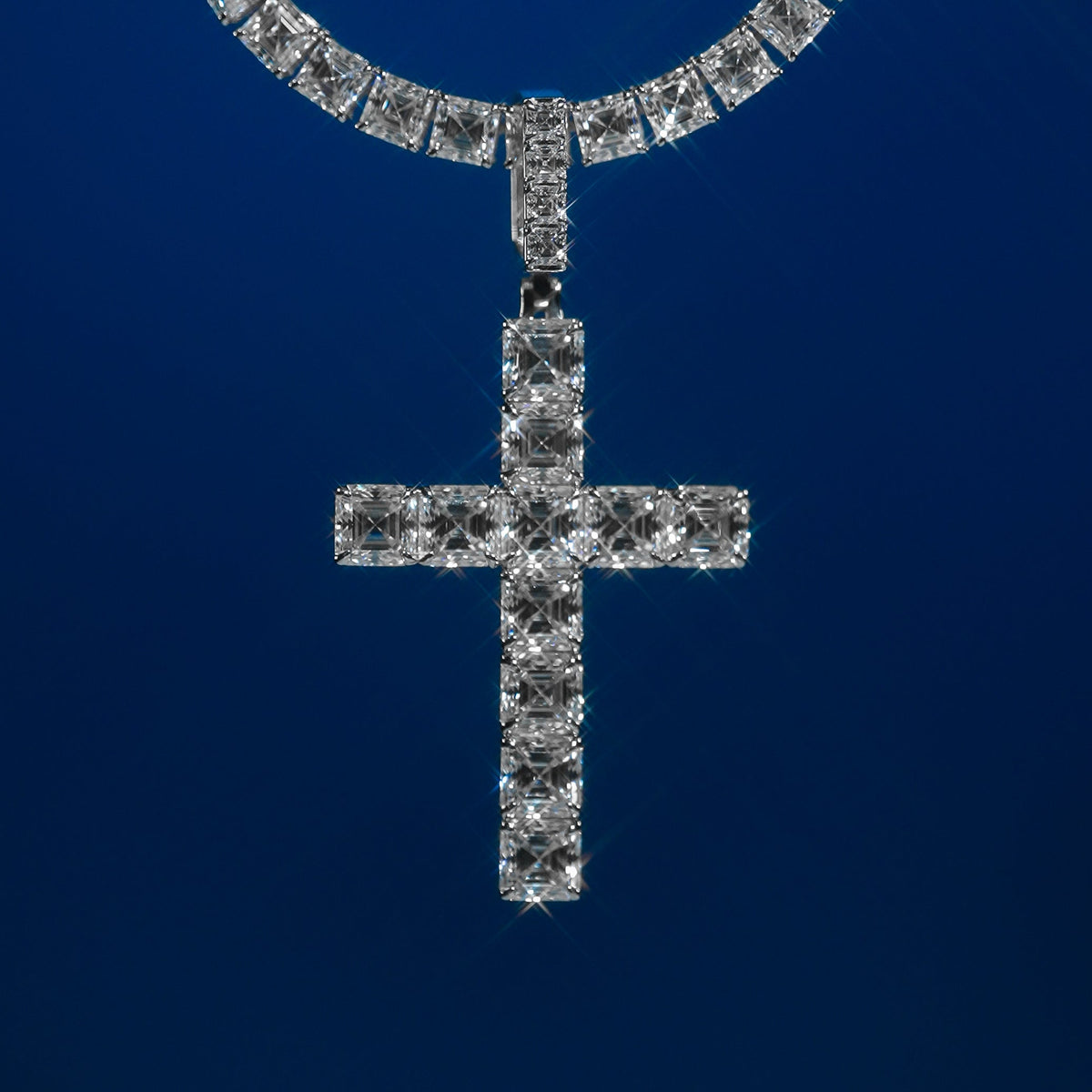
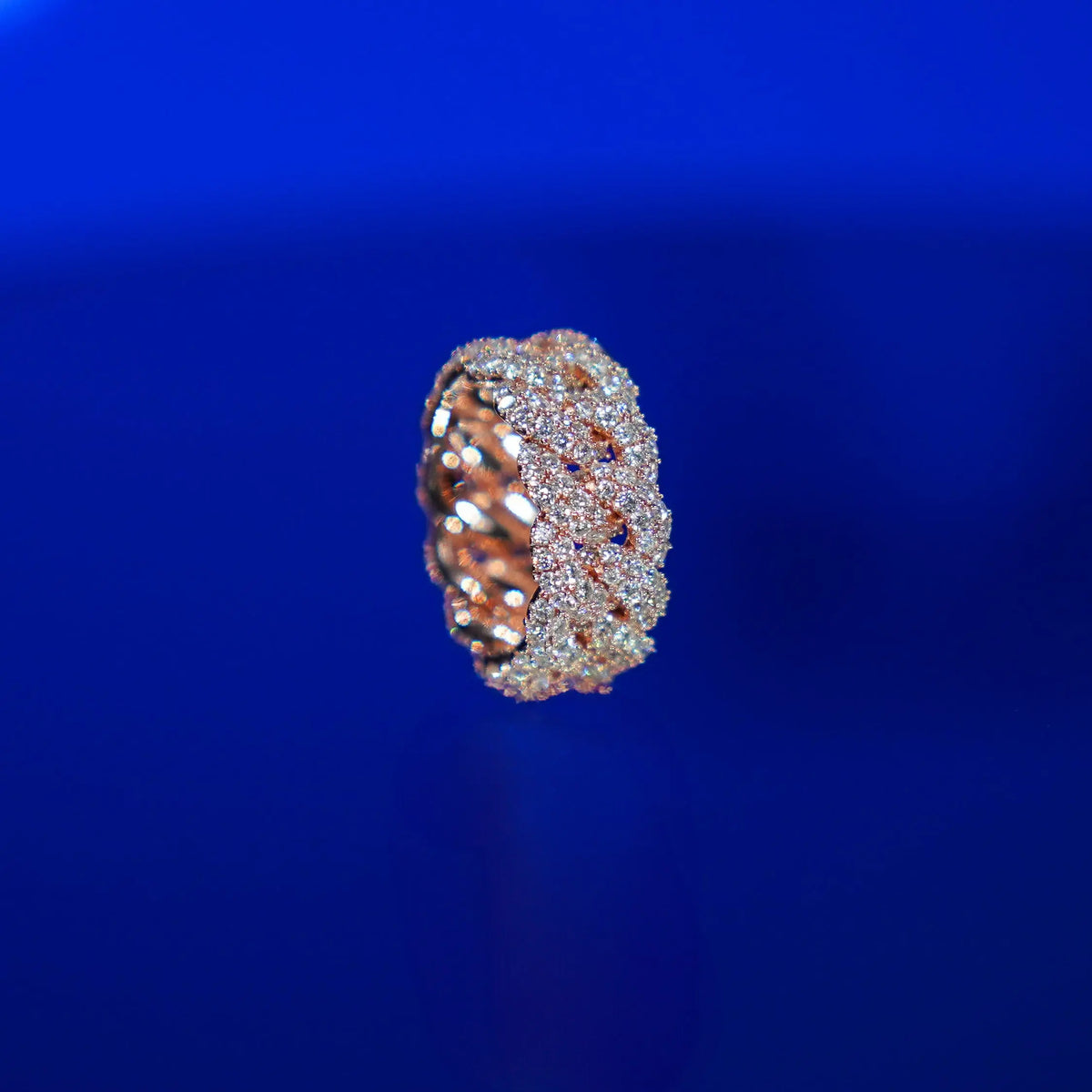
A solitaire ring has one main stone to inspect. A tennis chain, Cuban link or iced pendant can hold hundreds, and each one is a chance for a stone to sit high, tilt or mismatch its neighbor. Small inconsistencies multiply across a long piece.
This is where Miami The Jeweler's stone standard plays into quality control. MTJ uses VVS1, D-color moissanite only. In the brand's sourcing and production experience, using D color across every stone gives a long, stone-set piece the consistent, colorless appearance MTJ wants.
What happens when a piece fails?
Every jeweler has to decide what to do with a piece that falls short. A small issue, such as a stone that needs tightening, can be corrected and re-inspected. The harder question is what to do with a piece whose problems run through the whole build: uneven setting heights down a chain, poor alignment, or proportions that look wrong.
Sam Madrid's rule for his production team is direct: if a piece does not meet the top standard, melt it down and start over. The rule exists because patchwork seldom turns a flawed piece into a great one. Starting over costs time and labor, and MTJ accepts that cost to protect the finished result.
Sam has described building a like-minded team, and finding production experts who share his standard, as one of the challenges he had to overcome. Quality control is only as strong as the people doing it.
How can you run your own quality check?
You don't need a lab. You need good light, a few minutes and some patience.
- Lay the piece on a white surface in daylight.
- Scan every stone from end to end for color and size.
- Look along the row at eye level to check stone height.
- Tap the piece gently near your ear and listen for rattles.
- Drag a soft cloth over the stones to test for snagging prongs.
- Read the metal stamp and confirm any plating with the seller.
- Work the clasp several times.
- Turn the piece over and check the back.
If you shop in Miami, Miami The Jeweler's showroom in the downtown jewelry district gives you the chance to run this check yourself before you buy.
FAQ
Do all jewelers run quality control? Most jewelers inspect their work to some degree, but standards vary from seller to seller. Ask any jeweler what they check on a finished piece and how they handle pieces that fall short.
What should I do if a stone feels loose? Stop wearing the piece and take it to a jeweler. A loose stone can often be tightened before it falls out, and the jeweler can check the neighboring prongs at the same time.
Can I inspect a Miami The Jeweler piece in person? Yes. Visit 22 NE First St, Suite 225, Miami, FL 33132, or start at miamithejeweler.com.